
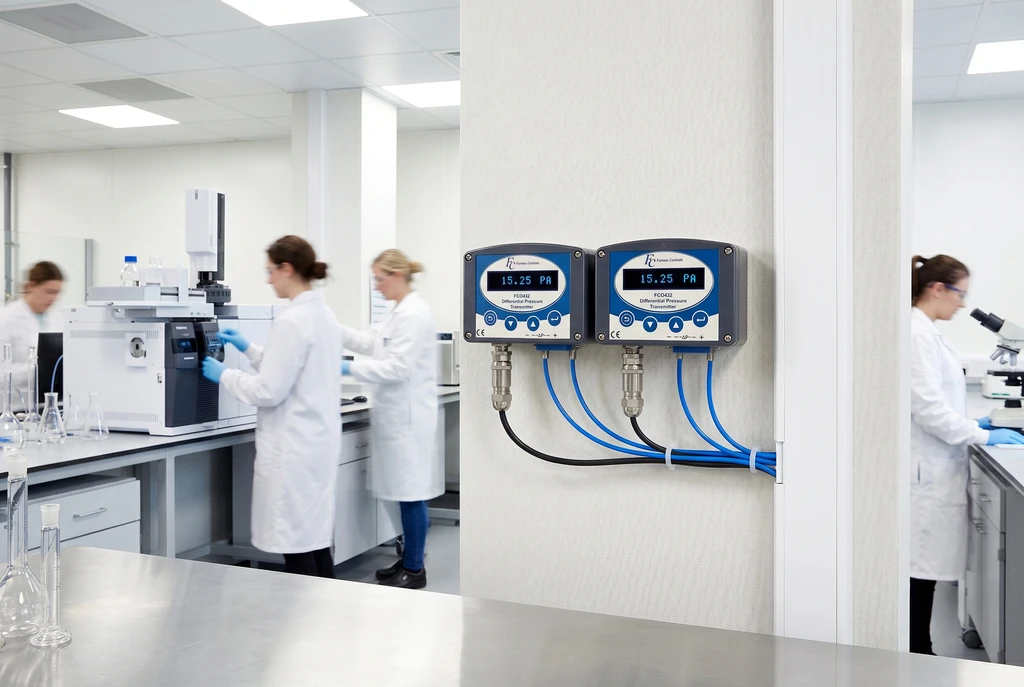
Operating in some of the world’s most highly regulated sectors requires precise environmental control, accurate monitoring, and reliable validation procedures. Within cleanroom facilities, maintaining stable pressure differentials and verified airflow performance is essential for protecting people, products, and manufacturing operations. Without precision end-to-end monitoring and maintenance, cleanroom facilities risk contamination, compliance failures and costly operational disruption.
Why are pressure differentials crucial in cleanrooms?
A well-established method for ensuring the protection of people, products, and manufacturing environments is through pressure cascades between rooms. These rooms rely on tightly controlled pressure differentials, where even small fluctuations can compromise product integrity or safety.
Differential pressure is crucial for controlling the direction of the airflow between spaces, ensuring air moves from cleaner areas to less clean areas. This pressure cascade prevents the ingress of contaminants such as dust and airborne particles, supporting effective air quality and contamination control.
In regulated industries including pharmaceuticals, biotechnology, semiconductor manufacturing, and healthcare, maintaining stable pressure conditions is not simply best practice but a compliance requirement aligned with standards such as ISO 14644 and Good Manufacturing Practice (GMP) guidelines.
What pressure should a cleanroom maintain?
Cleanrooms typically operate with differential pressures in the range of 5–15 Pa, although exact values depend on facility design, usage, classification, and risk assessment. The key requirement is stability rather than a fixed number. Even small fluctuations can compromise airflow direction and increase contamination risk. For this reason, systems must include clearly defined alarm thresholds to detect and respond to deviations in real time.
How is cleanroom pressure measured?
Ultra-low differential pressure transmitters such as the FCO432 Differential Pressure Transmitter are designed to accurately measure very low-pressure differences, commonly within a 0–50 Pa range. Installed between adjacent cleanroom spaces, they continuously monitor pressure cascades and provide real-time data to building or environmental monitoring systems.
For hazardous or potentially explosive environments, ATEX-certified instrumentation may also be required. The FCO454 Differential Pressure Transmitter is specifically designed for use in hazardous areas where combustible dust or explosive atmospheres may be present, such as pharmaceutical tablet manufacturing environments.
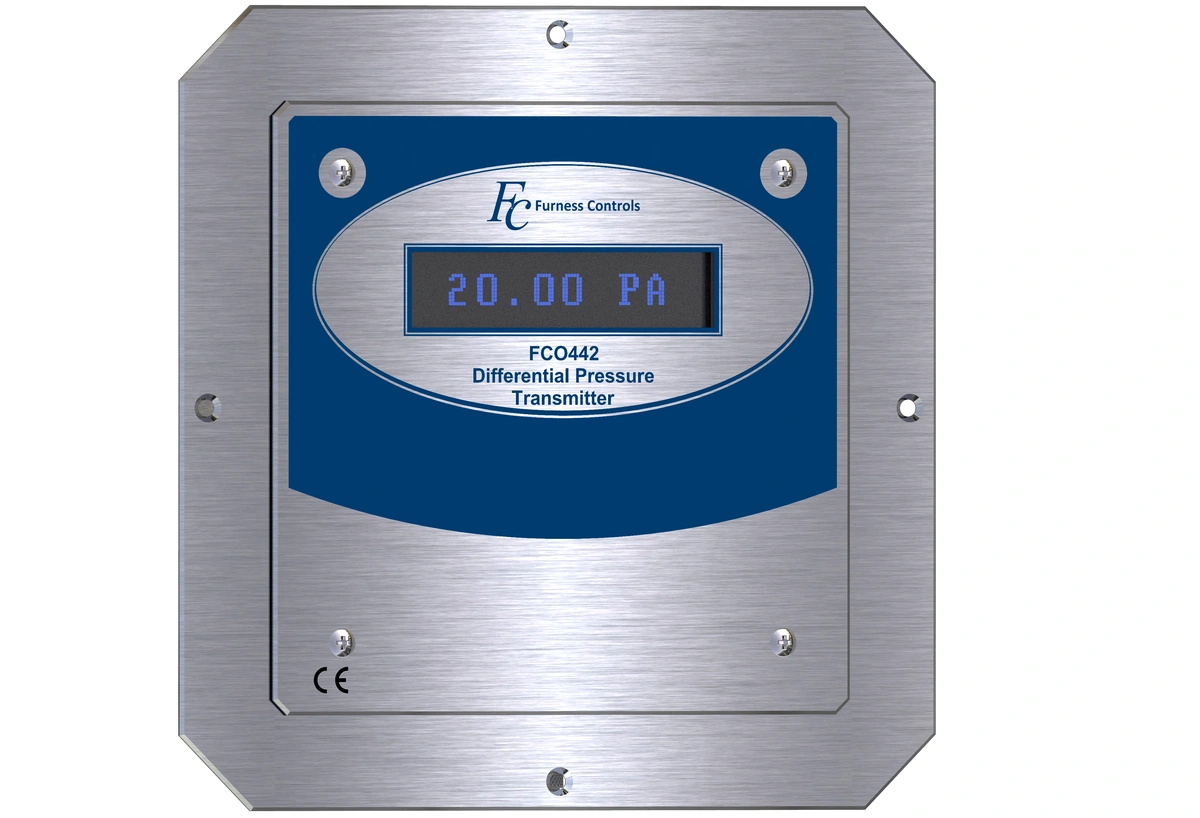
Built for highly stringent hygiene processes, the FCO442 Differential Pressure transmitter flush mount pressure transmitter's seamless stainless-steel design leaves no crevices for contamination to hide. This instrument is ready to stand up to the harshest cleaning agents. IP64 rated.
Our range of differential pressure transmitters enable trend analysis and reporting, alarm management, and audit-ready data records to ensure cleanroom conditions remain within validated limits.
Cleanroom Monitoring with Differential Pressure Transmitters and Pitot Tubes
While pressure confirms airflow direction, it does not indicate how much air is moving through the system. Cleanroom performance also depends on sufficient airflow to dilute and remove contaminants, typically measured as air changes per hour (ACH).
Pitot tubes are commonly used to measure airflow within HVAC ductwork. They determine velocity pressure, which is used to calculate air velocity and volumetric flow. By taking multiple readings across a duct, engineers can confirm whether the HVAC system is delivering the required airflow. Differential pressure transmitters used within HVAC systems can also provide valuable insight into filter condition monitoring. By measuring the pressure differential either side of a filter, operators can identify when filters are becoming blocked, as increasing resistance causes airflow reduction and corresponding pressure changes. Combined with Pitot tube airflow measurement, this allows facilities to monitor both airflow performance and filter efficiency as part of ongoing HVAC maintenance and cleanroom performance verification.
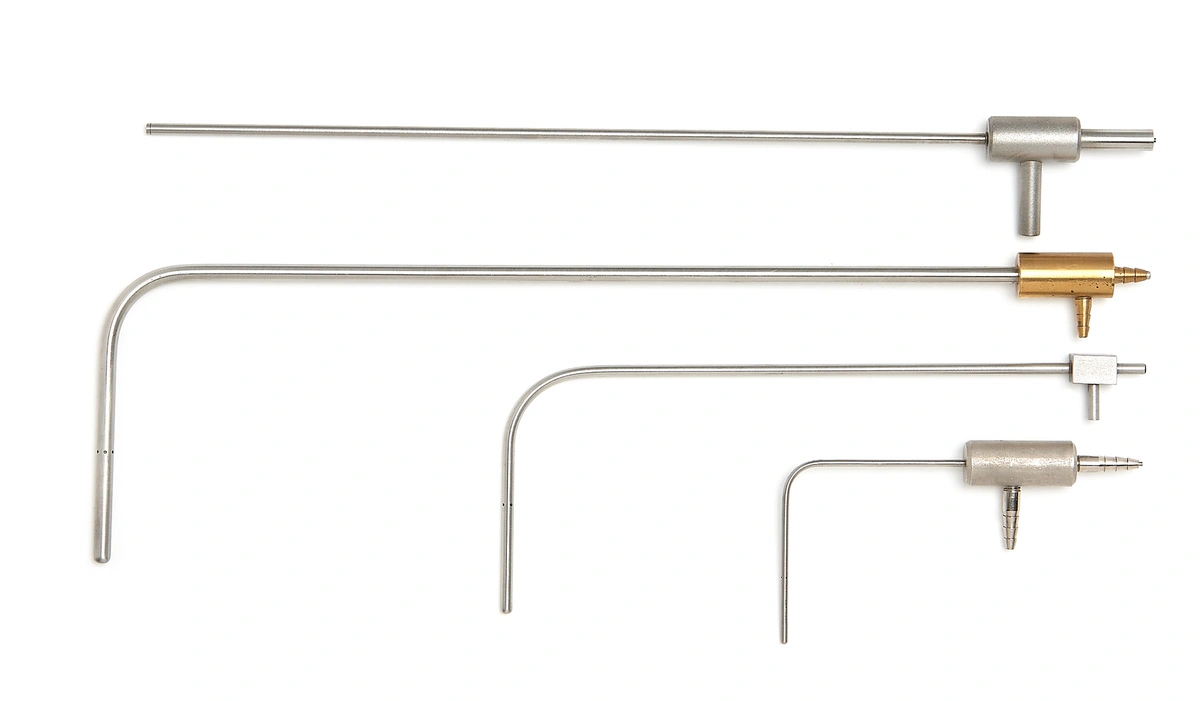
This is particularly important during commissioning, system balancing, and periodic requalification.
Relying on pressure or airflow measurement alone can create gaps in environmental control and system verification. Differential pressure transmitters provide continuous monitoring to ensure airflow direction is maintained, while Pitot tube measurements verify that sufficient airflow volume is being delivered throughout the HVAC system.
Calibration Support & installation of cleanroom measurement instruments
To support long-term performance and compliance, Furness Controls offers ongoing calibration services for differential pressure transmitters and airflow measurement instruments. Calibration can be carried out within our UKAS-accredited calibration laboratory or performed on-site using our portable calibration equipment, helping minimise disruption to your cleanroom operations while ensuring continued measurement accuracy and audit-ready compliance.
If you are considering installing or upgrading a cleanroom monitoring system, ensuring both pressure and airflow are accurately controlled and verified is essential.
Discuss Your Cleanroom Monitoring Requirements
As a UKAS-accredited facility, Furness Controls provides precision instrument installation services tailored to cleanroom environments, helping ensure monitoring systems are correctly installed, validated, and prepared for long-term operation. Get in touch and contact Furness Controls below to discuss your cleanroom monitoring requirements and discover how our end-to-end solutions can support you to meet compliance and environmental control at your cleanroom facility.